You Won’t Believe How Fast Technology Is Evolving in 2026
Technology in 2026 is evolving at a pace that is reshaping how people experience the world, often faster than society can fully adapt.
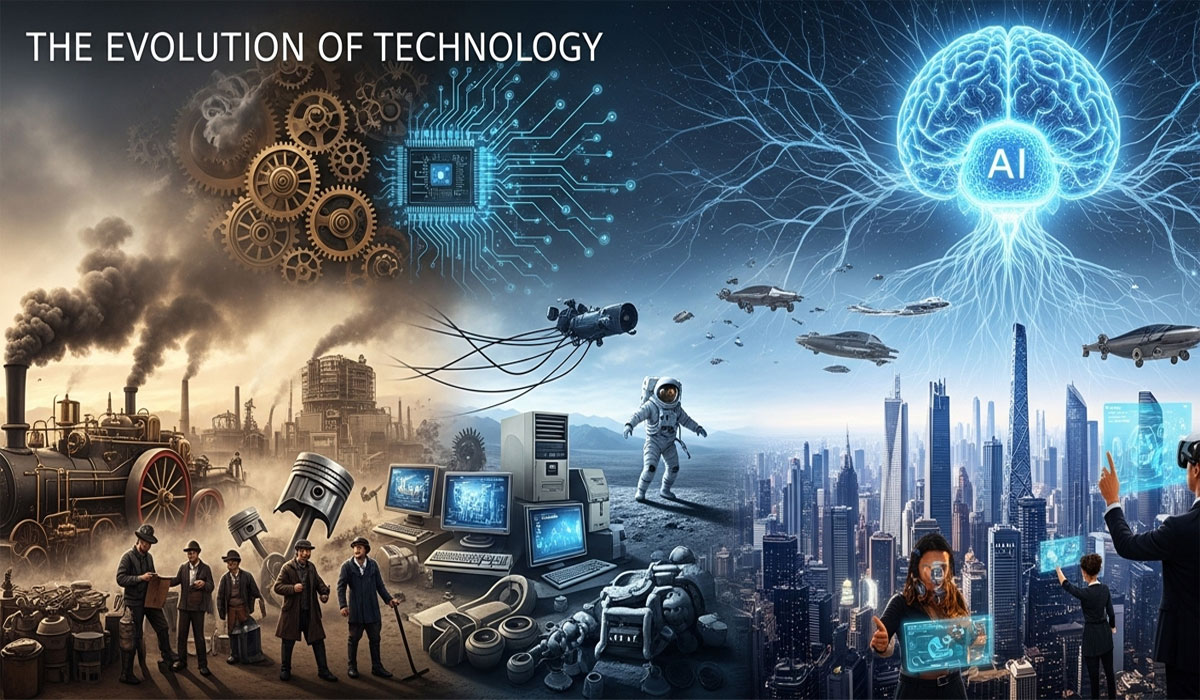
What once took decades to develop now happens within a few years, driven by breakthroughs in artificial intelligence, connectivity, and computing power. This rapid evolution is not just transforming industries, but also redefining everyday human interactions, expectations, and possibilities in ways that feel both exciting and overwhelming. See and follow the complete information only at G-Force Extraction | Cutting Edge Extrac.
The Acceleration of Artificial Intelligence in Daily Life
Artificial intelligence has moved far beyond experimental labs and is now deeply integrated into everyday life. From virtual assistants that manage schedules to intelligent systems that recommend content, AI is becoming an invisible yet essential part of modern routines. It learns from user behavior and continuously improves its responses, creating a more personalized experience.
Businesses are also benefiting from AI driven automation. Customer service, logistics, and data analysis are now handled more efficiently with minimal human intervention. This allows companies to operate faster and more accurately, while also reducing operational costs and improving service quality.
At the same time, the rapid growth of AI raises important questions about ethics and responsibility. As machines become more capable of decision making, ensuring transparency and fairness becomes increasingly important. Society is now challenged to balance innovation with accountability.
The Rise of Hyper Connectivity and Smart Ecosystems
Connectivity has reached a new level in 2026 with the expansion of high speed networks and the Internet of Things. Devices are no longer isolated but are part of interconnected ecosystems that communicate with each other seamlessly. Homes, cities, and even entire industries are becoming smarter through this integration.
Smart devices now work together to create more efficient environments. For example, home systems can adjust lighting, temperature, and security automatically based on user preferences. In cities, connected infrastructure helps manage traffic, energy consumption, and public services more effectively.
This level of connectivity also brings new challenges. As more devices become connected, the risk of cyber threats increases. Protecting data and ensuring secure communication between devices has become a critical priority for developers and users alike.
Also Read: Say Goodbye To Harsh Chemicals Here’s What Really Works!
Innovation in Computing and Emerging Technologies
Advancements in computing power are enabling technologies that were once considered impossible. Quantum computing, for instance, is beginning to show potential in solving complex problems that traditional computers cannot handle efficiently. This could lead to breakthroughs in medicine, climate science, and engineering.
Augmented reality and virtual reality are also becoming more practical and accessible. These technologies are being used not only for entertainment but also for education, training, and remote collaboration. They create immersive experiences that blur the line between physical and digital worlds.
Another emerging trend is the development of wearable and implantable technology. Devices that monitor health, enhance communication, or even assist with cognitive tasks are becoming more advanced. These innovations are pushing the boundaries of what technology can do for the human body.
The Human Impact of Rapid Technological Change
As technology evolves, it significantly impacts how people live and interact. Work environments are becoming more flexible, with remote and hybrid models supported by digital tools. This has changed the traditional concept of workplaces and opened up new opportunities for global collaboration.
Education is also adapting to technological change. Digital platforms provide access to learning resources from anywhere in the world, making education more inclusive. Students can learn at their own pace and explore subjects in more interactive ways.
However, rapid technological growth also creates challenges for society. Issues such as digital inequality, job displacement, and information overload need to be addressed. Ensuring that the benefits of technology are shared widely remains an important goal for the future.
Conclusion
The evolution of technology in 2026 is transforming every aspect of human life at an unprecedented speed. From artificial intelligence and hyper connectivity to advanced computing and societal changes, the impact is both profound and far reaching. While these advancements offer incredible opportunities, they also require careful consideration and responsible management. As technology continues to evolve, the challenge will be to harness its potential in ways that enhance human life while maintaining balance, security, and inclusivity.
Image Information Source:
- First Image of www.instamojo.com
- Second Image of www.instamojo.com