Ancient Technological Wonders: Innovations That Ahead of Time
Throughout human history, innovation has driven progress, turning ideas into extraordinary realities history.

Long before the rise of digital technologies, ancient civilizations crafted inventions that were remarkably sophisticated. These breakthroughs not only solved practical problems but also pushed the boundaries of knowledge and creativity. Understanding these technological marvels provides invaluable insights for modern business leaders striving for sustainable growth and competitive advantage.
Below we will G-Force Extraction | Cutting Edge Extrac discuss some of the amazing ancient technological innovations that not only changed the lives of people in the past, but also provided inspiration for the modern business world.
The Antikythera Mechanism: The First Computer
The Antikythera Mechanism, discovered in a Greek shipwreck, dates back to around 100 BCE. This intricate device functioned as an analog computer, predicting solar and lunar eclipses, planetary movements, and even the timing of the Olympic Games. Its precision demonstrates the extraordinary capabilities of ancient engineers.
The mechanism was constructed using a complex arrangement of bronze gears, carefully calibrated to simulate astronomical cycles. The fact that such an advanced instrument existed over two thousand years ago challenges the modern assumption that sophisticated computing is purely contemporary.
For businesses today, the Antikythera Mechanism serves as a metaphor for predictive analytics. Just as the device allowed ancient civilizations to anticipate celestial events, modern enterprises use data forecasting to anticipate market shifts. Investing in analytics tools and predictive technologies can give companies a competitive edge akin to the mechanism’s advantage in its era.
Roman Concrete: Building to Last Millennia
Roman concrete, or opus caementicium, was revolutionary because it grew stronger over time rather than degrading like modern concrete. Iconic structures such as the Colosseum, aqueducts, and the Pantheon still stand after nearly two millennia, showcasing both durability and ingenuity.
The secret ingredient was volcanic ash, which allowed chemical reactions with water to create a resilient matrix. Modern scientists study this formula to inspire eco-friendly construction materials that minimize carbon footprints and last longer than conventional alternatives.
For modern entrepreneurs, Roman concrete highlights the importance of long-term investment. Products and services that focus on durability, sustainability, and quality can generate lasting brand equity, much like Roman structures have stood the test of time. The lesson is clear: building with foresight yields returns far beyond immediate gains.
The Baghdad Battery: Early Electrochemistry
Artifacts discovered near Baghdad suggest that ancient civilizations experimented with electricity. The Baghdad Battery, a clay jar containing a copper cylinder and iron rod, could have produced small electric currents, potentially for electroplating or medicinal purposes.
Although its exact function remains debated, the battery reflects an inquisitive spirit and willingness to experiment. It highlights a mindset crucial to innovation: exploring ideas even without guaranteed success.
For modern businesses, the Baghdad Battery symbolizes the power of experimentation-driven research and development. Many disruptive products emerge from curiosity-driven exploration. Companies that encourage small, controlled experiments can unlock breakthrough innovations, gaining advantages similar to ancient pioneers who experimented with electricity.
Read Also: Cutting-Edge Innovations Transforming the Food and Pharmaceutical Industries
Greek Fire: Ancient Chemical Warfare
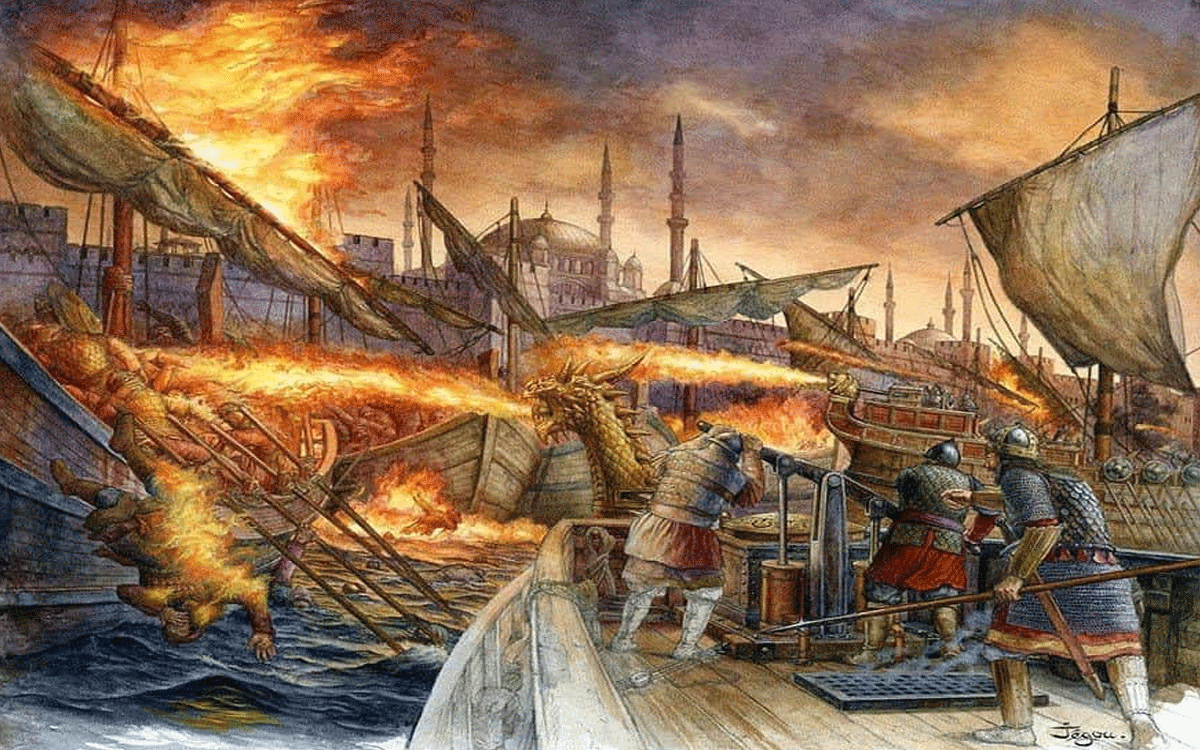
Greek Fire was a formidable weapon used by the Byzantine Empire in naval battles. It was a flammable liquid that could burn on water, giving Byzantines a significant military advantage. The exact formula remained secret for centuries, making it a strategic asset that opponents could not replicate.
This innovation combined chemistry, strategy, and resourcefulness, illustrating how specialized knowledge can yield decisive advantages. Greek Fire’s impact extended beyond warfare it influenced trade security, political power, and resource management.
In business, Greek Fire exemplifies the value of proprietary technology. Protecting unique processes or patents can create barriers to entry, safeguard market share, and establish a company as an industry leader. Strategic intellectual property management remains as critical today as it was for Byzantines controlling this secret weapon.
Incan Road Systems: Infrastructure as Innovation
The Incan Empire constructed over 25,000 miles of roads through the rugged Andes Mountains, connecting remote communities and supporting trade, communication, and military operations. Their infrastructure included suspension bridges, stone-paved highways, and carefully designed drainage systems.
These roads were more than transport routes; they were a framework for economic efficiency and political cohesion. By overcoming geographic challenges with innovative engineering, the Incas maintained control over a vast and diverse empire.
For modern businesses, this underscores the strategic value of infrastructure. Whether digital networks, supply chains, or operational frameworks, robust systems facilitate scalability, connectivity, and resilience. Investing in infrastructure is not just logistical it is a competitive strategy that enables sustainable growth.
For readers interested in G-Force Extraction | Cutting Edge Extrac exploring more about ancient innovations and their modern applications, check out this detailed analysis of historical technologies and business insights.
Image source
- First Image gforceextraction.com
- Second Image greekcitytimes.com